
Can You Electroplate 3D Parts?
February 17, 2025 | Stephen Sharretts | Share

Electroplating 3D parts makes them even more versatile. While plastic parts won’t conduct electricity, you can electroplate them to add conductivity and open up more design opportunities. SLA printers work best with electroplating because they produce smooth layers that can better adhere to the metal, but other printing methods can also accommodate electroplating. Electroplating onto printed components can add conductivity and a wide range of other physical properties,1 like strength and specific surface finishes.
You can find electroplated 3D printed parts in many of the applications we’ve discussed, such as on-demand parts, prototyping and large-scale production.
Despite its flexibility, electroplating comes with potential challenges. One of the most difficult aspects of electroplating is staying up to date with the technology. The field of injection molding often introduces new resins and techniques that might affect how the products interact with different types of electroplating. You may need to stay in the loop on how these new materials might impact characteristics like rigidity, adhesion and flexibility. Plastic sometimes poses unique plating challenges,2 so staying knowledgeable can be difficult.
Electroplating is a complex process, but working with a professional team who understands industry updates allows you to maximize the value of your 3D-printed parts.
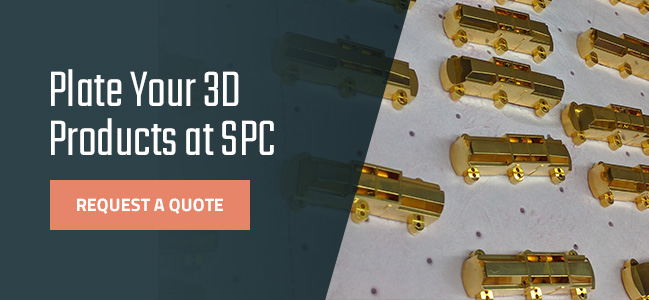
With each passing decade, SPC has remained at the forefront of innovation in the world of plating. Now, with 3D printing technology approaching maturity, we are determined to meet the demands of this exciting and revolutionary new form of product creation. Contact us for a quote.
Sources:
Resources & Insights
Related posts
Explore articles similar to this one
Sharretts Plating Announces Strategic Expansion to Advance Wafer-Level Metallization Capabilities
York, Pennsylvania — April 13th, 2026 — Sharretts Plating Company (SPC), a leader in advanced metal finishing and engineered surface…
Learn more
What Is the Difference Between OSP and ENIG? A Complete PCB Finish Comparison
The surface finish selected for printed circuit board (PCB) fabrication is a critical determinant of manufacturing yield, solder joint reliability, shelf life…
Learn more
Gold Plating Standards
Gold is known for its glitter and glamour, but it also has significant value from an electroplating perspective. Why should…
Learn moreStay in touch